Clogged Ducts Won’t Go Away? What Most Lactating Parents Are Missing

If you’re dealing with clogged ducts that keep coming back—or just won’t fully resolve—you’re not doing anything wrong.
Much of the advice out there focuses on one idea: “Working the milk out.”
While that approach can be helpful in some situations, in others it may contribute to increased discomfort, especially if inflammation is already present.
As an infant physical therapists and breastfeeding specialists working with families in Austin, we see a broader pattern: Many cases of persistent breast pain, clogged ducts, and even early mastitis are not just about milk flow, but also about inflammation, pressure, impaired fluid movement, and how milk is (or isn’t) being removed in the first place. Let’s walk through what that actually means—and how to approach it more comprehensively.
Clogged Ducts vs. Inflammation: Why the Difference Matters
A “clogged duct” sounds like a simple blockage that needs to be pushed out. In many cases, however, the situation is more complex. It may involve
• localized swelling
• inflammation of surrounding tissue
• external compression of milk ducts
This can create a traffic jam involving multiple fluids, not just milk. Think about a highway with one lane closed down. You might notice the same spot flaring up repeatedly, soreness that lingers even after feeding, or symptoms that worsen with aggressive massage.When we treat it like a blockage alone, we may overlook the surrounding factors contributing to the issue.
Breast Health Is Also About Milk Transfer
Another piece that’s often overlooked is your baby’s ability to coordinate a strong, effective feed. Even if you’re feeding frequently, clogged ducts can persist if milk isn’t being removed efficiently. Milk removal is influenced not only by timing or supply but also by your baby’s oral motor skills, meaning your baby’s ability to coordinate their tongue, jaw and lips to
• create suction
• maintain a seal
• transfer milk effectively
A More Comprehensive Approach to Breast Health
Rather than focusing only on pushing milk through the breast, recent research emphasizes reducing pressure, improving circulation, and supporting efficient milk removal. This means looking at both what is happening within the breast and how feeding mechanics may be contributing. At Year One Wellness, we use several approaches to support this process.
Therapeutic Ultrasound is one tool that can support stubborn or recurrent cases. It helps • soften inflamed or congested tissue
• improve local circulation
• reduce discomfort to allow better milk movement.
It’s not about “breaking up a clog.” It’s about changing the environment of the tissue so the body can function more effectively.
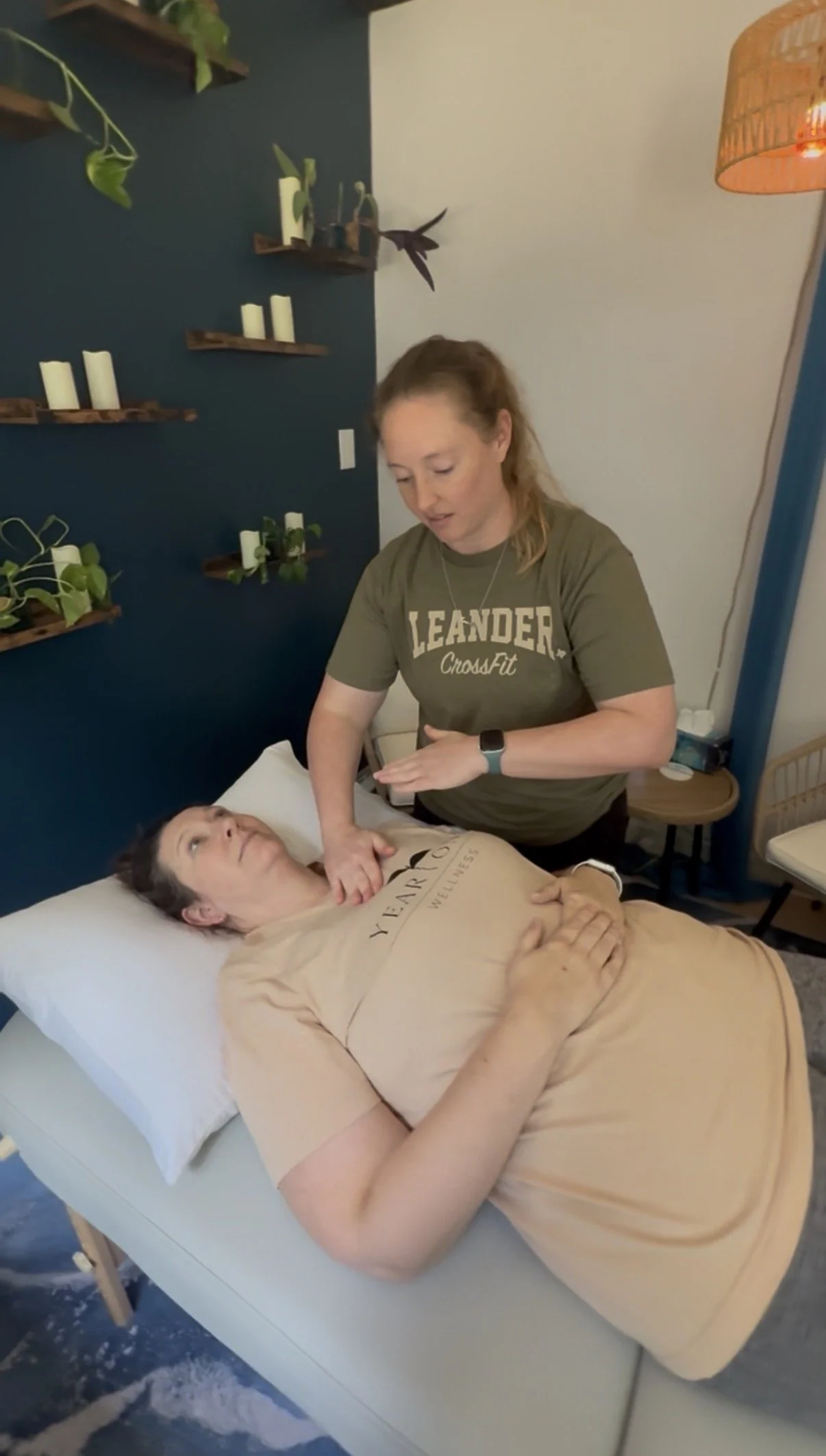
Lymphatic Drainage is a gentle, specialized technique that supports the lymphatic system, a key player in managing fluid and swelling in the body. Lymphatic drainage massage helps to • reduce pressure in breast tissue
• improve fluid circulation
• reduce swelling in the breast
• relieve discomfort without adding more pressure
Many lactating parents are surprised by how light and targeted this approach is.
Therapeutic Exercise includes purposeful movement mechanics and strengthening to • reduce pressure on breast tissue
• improve mobility through chest and ribs
• support circulation and drainage of fluid
These targeted exercises address the compression and reduced fluid flow that are caused from rounded shoulders, sustained pressure from bras and carriers, and limited upper body movement that are common the postpartum period.
When Symptoms Keep Coming Back
If you’re experiencing
• recurrent clogged ducts
• breast pain that doesn’t fully resolve
• early signs of mastitis
• ongoing feeding challenges
…it may be time to explore underlying contributors, whether tissue health, fluid movement, or feeding mechanics. If you’re in Austin and looking for support, working with a provider who understands both breast health and infant feeding mechanics can make a meaningful difference. For more information, feel free to reach out to us! Our team of clinicians are here to help!